
0 Comment(s)
336 View(s)
21 Jul 2026
Why a High-End Streamer Determines the Quality of Digital Audio?
WAV, FLAC, DSD and PCM – how to coax music from digital files that comes closest to analog sound
A few years ago, listening to music was simple. A CD player, an amplifier, and a pair of speakers made up an entire Hi-Fi system. Today, digital streaming has become the primary source of music. Millions of high-resolution albums are just a few taps away.But with the rise of services like Qobuz and TIDAL, a new question has emerged:
If everyone is playing the same FLAC file, why don't systems sound the same?
More and more music lovers are asking themselves this. At first glance, the answer should be simple — a digital file is made up of zeros and ones, so the result should always be identical.
In practice, though, the story is quite different.
That's precisely why high-end music streamers have become one of the most important components in a modern Hi-Fi system.
The digital revolution changed the way we listen to music
Twenty years ago, we listened to music mainly on CDs. MP3 files followed, and while they conquered the world thanks to their convenience, sound quality was often left by the wayside.Today the picture looks completely different.
Qobuz offers streaming quality up to 24-bit/192 kHz, with many albums available in studio-master quality. TIDAL provides an extensive library of high-resolution recordings, and more and more users are also storing music on home NAS servers in FLAC or DSD format.
This means digital files have reached a level of quality that was, until recently, reserved for professional recording studios.
But file quality is only the first step.
A myth that still circulates among digital audio enthusiasts
One of the most common arguments on online forums goes:"A bit is a bit. If the data is identical, the sound must be identical too."
That's only partly true.
If a digital system consisted of nothing more than data transfer, every streamer would perform equally well. In reality, though, the device has to accomplish a far more demanding task.
Beyond simply transferring data, it must also deliver:
• extremely precise timing alignment of the digital signal,
• a completely stable power supply,
• minimal electrical noise,
• flawless communication with the DAC,
• correct handling of every music format,
• a high-quality analog output stage on models with a built-in DAC.
These are exactly the areas where differences arise — differences an experienced listener will quickly notice.
What does a streamer actually do?
Many people compare a streamer to a computer.That's not entirely wrong, but a quality streamer is a far more specialized device.
Its job isn't simply to play files.
A high-end streamer must:
• communicate with music servers,
• decode various music formats,
• eliminate the influence of network noise,
• prepare a completely stable digital signal,
• align the timing precision of all data,
• work flawlessly together with the DAC.
If any of these tasks isn't executed optimally, it can show up as a less precise soundstage, weaker dynamics, or a less natural sound.
Why don't all streamers sound the same?
On paper, two devices might support the same formats:• FLAC
• WAV
• DSD512
• PCM 384 kHz
But underneath, there are significant differences.
The biggest factors are:
The Clock
The digital clock determines exactly when each sample is converted into an analog signal.Even extremely small timing errors cause a phenomenon known as jitter.
The consequences aren't as obvious as pops or hiss — they're far more subtle:
• a less stable stereo image,
• less precise instrument localization,
• less air between instruments,
• a slightly harder or less relaxed sound.
That's why leading manufacturers use extremely precise Femto Clock oscillators, whose timing error is exceptionally small.
The Power Supply
This is an area most users significantly underestimate.Digital electronics are extremely sensitive to electrical noise.
If the power supply isn't stable enough, noise levels within the circuitry can rise, indirectly affecting the quality of the analog output as well.
That's why high-end streamers often feature:
• separate power supplies for individual sections,
• low-noise regulators,
• high-quality transformers (on models with linear power supplies),
• carefully designed grounding.
These are details that aren't obvious at first glance, yet they contribute significantly to a cleaner, more natural sound.
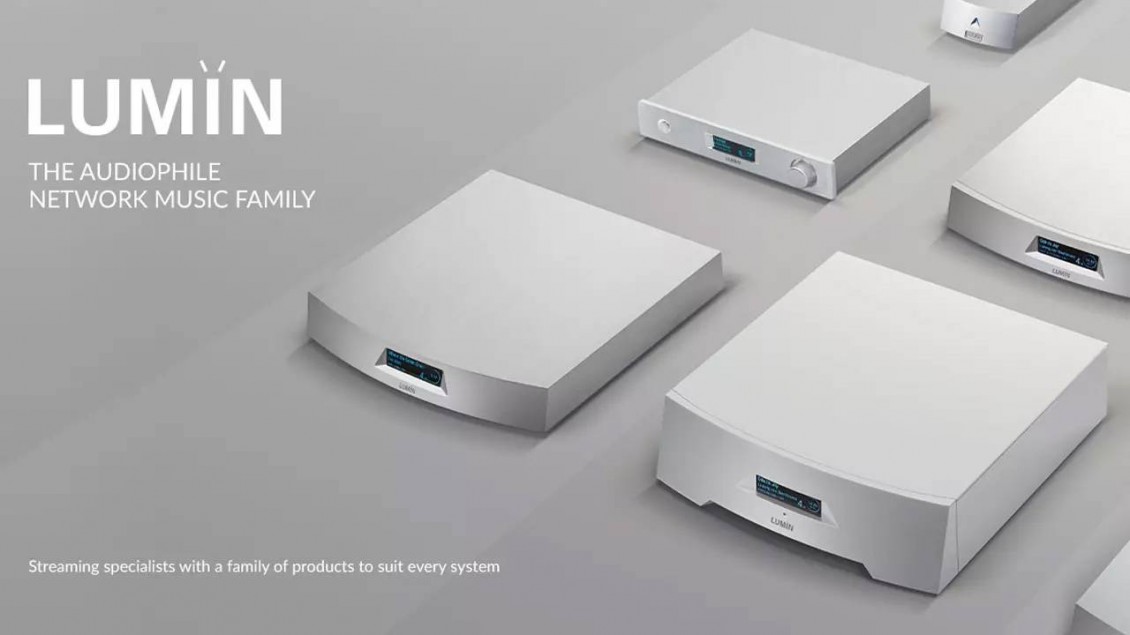
Why has LUMIN become the reference among High-End streamers?
When LUMIN introduced its first network player back in 2012, most manufacturers were still focused on CD players.The company recognized that the future of high-quality music listening would be built on network playback, and so it directed its entire development philosophy exclusively toward streamers and digital music sources.
That represents more than a decade of uninterrupted development in a single field.
Rather than developing dozens of different types of devices, LUMIN has dedicated itself to perfecting digital playback — from the hardware and analog output stages to its own proprietary software platform.
This focus is one of the reasons LUMIN enjoys such a strong reputation among audiophiles worldwide.
Long-term support is equally important. LUMIN is known for the fact that many of its older models continue to receive free software updates, new features, and support for new music services for years on end. That means a purchase isn't just an investment in great sound today — it's an investment in reliable performance well into the future.
Lumin Music